What to see in Lampedusa
The island's attractions and unmissable places
LAMPEDUSA
It is one of the most sought-after destinations for those who love the sun, diving, and wild nature: this is Lampedusa, the southernmost stretch of Italian territory before the African coast.
Must-see
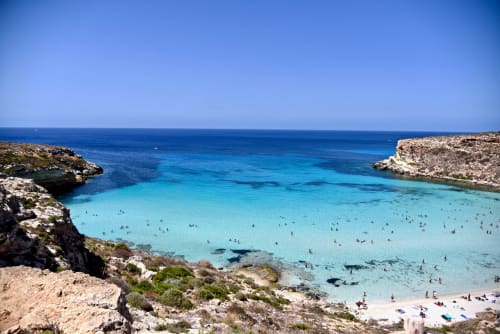
The coast on the northern and western sides is high and inaccessible, while on the eastern and southeastern sides it has magnificent sandy beaches.
From the smallest to the largest and most crowded, Lampedusa's beaches are many.
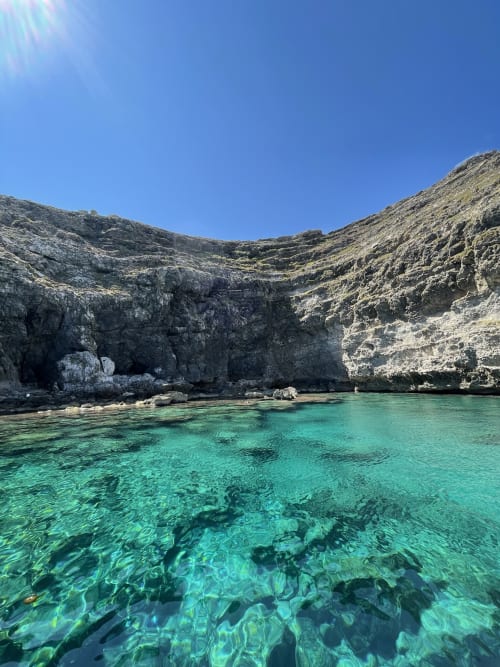
Opening onto a splendid sea are the two small coves: Pisana and Uccello.
In contrast, it is part of a wide inlet Spugna or Maluk cove, east of the island. Tiny and with very white sand cala Greca, unknown to many instead cala Galera, which is reached by passing through spectacular valleys (sea inlets).
Worth seeing on Dead Sea beach, so named for the calm sea, is the cave of the same name.
From the smallest to the largest and most crowded, Lampedusa's beaches are many.
Opening onto a splendid sea are the two small coves: Pisana and Uccello.
In contrast, it is part of a wide inlet Spugna or Maluk cove, east of the island. Tiny and with very white sand cala Greca, unknown to many instead cala Galera, which is reached by passing through spectacular valleys (sea inlets).
Worth seeing on Dead Sea beach, so named for the calm sea, is the cave of the same name.
Then there are the beautiful and little-visited Cala Francese and the famous and very popular Guitgia beach, which is also connected to the town by public transportation and is the closest to the hotels.
From here you reach the inlet of Cala Croce and the beaches of Cala Madonna and Porto N'Tone: especially the latter, very small and with fine white sand, is ideal for families with children.
On the south side of the island, on the other hand, is Cala Pulcino, where numerous caves can be visited.
From here you reach the inlet of Cala Croce and the beaches of Cala Madonna and Porto N'Tone: especially the latter, very small and with fine white sand, is ideal for families with children.
On the south side of the island, on the other hand, is Cala Pulcino, where numerous caves can be visited.
To do
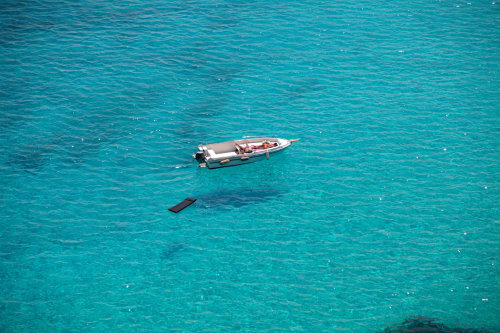
A boat tour of Lampedusa, which takes 3-4 hours, is the best way to appreciate the beauty of the beaches and coves.
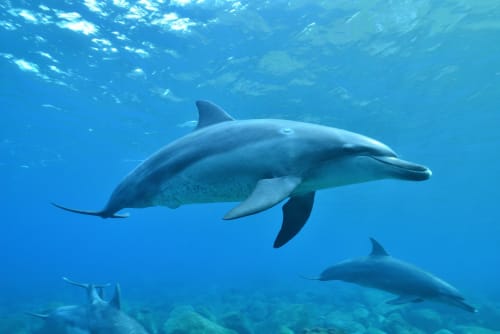
The clear waters and beautiful seabed and abundance of flora and fauna make this island a favorite destination for scuba diving, even at night.
There are many points from which to start diving and snorkeling.
An easy dive takes you to the large statue of Our Lady of the Sea, at14 meters deep, surrounded by dens of octopus and bream.
Nearby, a large, pancake-shaped emerged rock creates yet another dive site where you can admire groupers, bream and snapper. To swim among the green expanses of Posidonia Oceanica, you have to get close to Punta Parrino, which protects the island from waves and wind.
The clear waters and beautiful seabed and abundance of flora and fauna make this island a favorite destination for scuba diving, even at night.
There are many points from which to start diving and snorkeling.
An easy dive takes you to the large statue of Our Lady of the Sea, at14 meters deep, surrounded by dens of octopus and bream.
Nearby, a large, pancake-shaped emerged rock creates yet another dive site where you can admire groupers, bream and snapper. To swim among the green expanses of Posidonia Oceanica, you have to get close to Punta Parrino, which protects the island from waves and wind.
Spectacular diving at Taccio Vecchio to admire both the underwater cave of the same name and parrotfish. In the same area there is also Punta Cappellone, populated by tuna, amberjack, bream, snapper and groupers; while in the Levante shoal, when the sea allows, you can dive and observe specimens of Caretta caretta turtles.
To the north, where the coast is rocky, there are the dens of lobsters, snappers, scorpionfish and groupers. Also, in April, sperm whales can be spotted.
Those who prefer hiking to the sea can walk the paths that lead to the top of the island's three main reliefs: Mount Rosso, whose crater is occupied by crops, Mount Nero, and Mount Vulcano.
To the north, where the coast is rocky, there are the dens of lobsters, snappers, scorpionfish and groupers. Also, in April, sperm whales can be spotted.
Those who prefer hiking to the sea can walk the paths that lead to the top of the island's three main reliefs: Mount Rosso, whose crater is occupied by crops, Mount Nero, and Mount Vulcano.